
Faculty Q&A: Ed Traversari, MBA, Takes the Stage with Stories and Unique Experiences in the Classroom
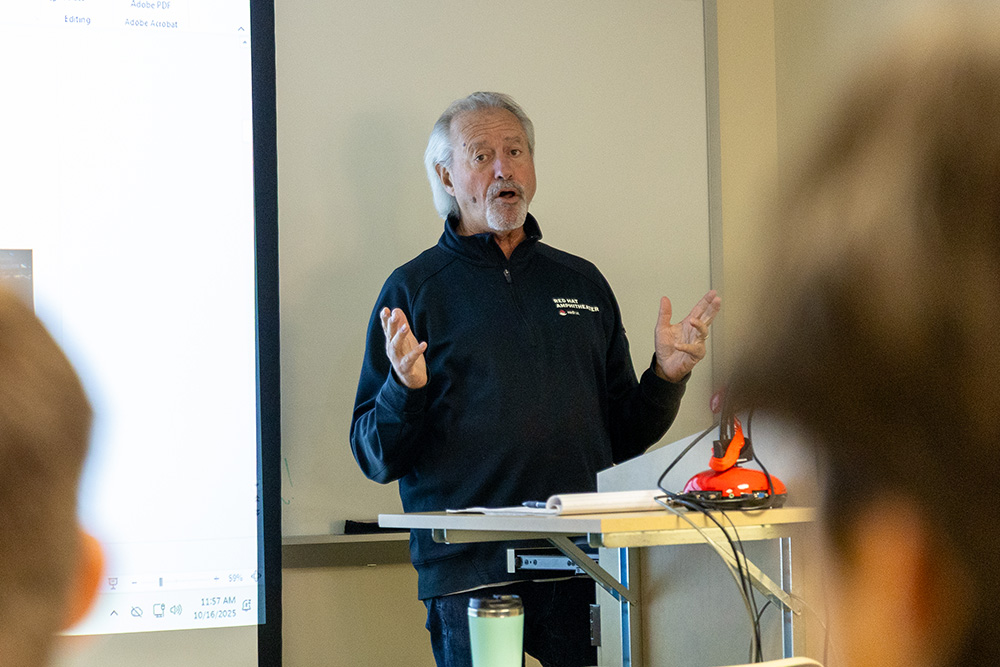
Ed Traversari, MBA, teaches a class of Sports, Arts, Entertainment & Music Business students at Point Park University.
"The goal of our department is to make sure that these students are prepared to go out and get jobs. We're big on taking your passion and making it into your life's work."
Ed Traversari, MBA, is a professor in the Sports, Arts, Entertainment and Music Business program at Point Park University. With over 30 years of experience in the entertainment industry and plenty of behind-the-scenes stories with major names in the business, he is helping the next generation of entertainment production specialists find their footing in a highly competitive industry.
In the Q&A and video below, Traversari shares some of the highlights of taking one of his classes and how the conversations keep students coming back to him for advice even after graduating.
What is it like being in your classroom?
In my classroom, you're going to hear stories about what it was like when I was in the business, and you're also going to have guest speakers. I like to bring people in from all over parts of the industry, so that if I'm talking about running a venue in my venues management class, students get to hear directly from a general manager from the Peterson Events Center or from Acrisure Stadium. My lectures include discussing information from books and PowerPoint presentations, with interaction among the class. I always tell the students that I love when they ask questions, because I like to be able to say, 'Tell me something that came up while you were going to a concert or a sporting event, where something came up and you wonder why that happened? Why did I get to the venue when it was show time and I'm standing outside?' I wasn't at that show, but there's a good chance I'm going to give you an answer based on something that I did in the past 30 some years in the industry.
What is your personal philosophy for teaching?
My personal philosophy for teaching is to be hands on. I tell a lot of stories, as they are often related to a situation that could come up. It could be a cancellation, it could be a postponement, it could be an artist getting sick. It could even be the truck being stuck in a snowfall somewhere. Those stories help so that, at some point in this person's career, if they have to deal with that situation, they can think back to Point Park. One of the stories I often share is on a Celine Dion show that I had one time at the old Civic Arena. We had a problem with some of the rigging that we were working with and had to postpone that night when 18,000 people were coming. How did we deal with that? Did we bring her back? Did we reschedule? Hopefully, students learn something from that story if they face something similar in the future.
Is there a teaching moment that stands out where you were able to help a student?
I talk about one time we had Jimmy Buffett out at Star Lake and we had one of the worst storms you could have ever imagined. So, what has to happen when a show gets either postponed or canceled? I go through the whole explanation about making announcements before we turn the sound system off, before we let people go back to their cars. We now have social media to tell them they can come back into the venue. I find that important, because, as I tell the students, many of you will be working in this business. You won't be doing Jimmy Buffet, of course, but you will be doing a show someday where you might come across a postponement or cancellation due to weather. I had a student from our program, Adam Valen, who did the Four Chord Music Festival, which is a really cool festival that the Washington Wild Things did last year. I saw him after and he said, 'You know, you always talked about those postponements. We had the worst storm and all I could think was Mr. T talking about, what are we doing next? Do we write a press release? How do we announce the show? How do we tell people to get in their car?' That was great.
What do you like about teaching at Point Park University?
What I really enjoy about teaching at Point Park is the fact that we have a lot of passionate students. The students that are in the Sports, Arts, Entertainment and Music Business program want to be in this industry someday. They are just as hungry as I was when I was in college. I didn't have somebody in my school to tell me what to expect, because I wasn't in a program like ours in the 70s. I find it so interesting, because I have many of our students who will come to my office and sit there and just want to take it all in. 'How can I do an internship?' 'Can you give me some volunteer work?' 'What would you have done in this situation?' To get that feedback from students, then see them go out into the world to do what they want to do, is very enjoyable and it's what keeps me here at Point Park.
What are the SAEM department's goals?
The goal of our department is to make sure that these students are prepared to go out and get jobs. We're big on taking your passion and making it into your life's work. I tell students all the time: they came here because they might like music. If you're in our program, but you don't know how to play an instrument or sing, but you like going to concerts, why not make a livelihood out of what you can do in the business? It's the same thing as sports: if you have played sports in high school and you come now to the university, why can't you work at PNC Park or for the Steelers? We want to see kids take that passion and get a chance to work in the way that some of us have been able to do in our lives.
What is the advantage of attending a university Downtown?
One of the things that we feel is special about the program is that students can walk to just about anywhere that they need to go. If you're an intern and you're doing an internship in the Cultural Trust area, the Theater District, PPG Paints Arena Stage, Stage AE, PNC Park or Acrisure Stadium — these are all places that you can walk to or get to on a bus. A lot of universities, just because of the way they're set up, are not close to those kinds of businesses. An advantage of being downtown is having a lot of businesses right around the corner, so that when we're taking them on a tour, we don't have to go far. But I think from a student perspective, they can really interact where there's just a lot of things going on, especially in the City of Pittsburgh today. You can take advantage of those things that you can't when you're out in a suburban type of campus.
What do you do for fun around Pittsburgh?
I'm a concert man from way back and play as a drummer in a classic rock band called the Good Karma Band. While I don't produce the shows like I used to, I still enjoy going to see a good show at Stage AE, the Peterson Events Center or PPG Paints Arena. It's always a lot of fun, even if I don't know some of the bands as well as the ones I used to produce.