
School of Education Alumna and Adjunct Professor Appointed President of the Association for Medical Education and Research in Substance Abuse Alumni Profile
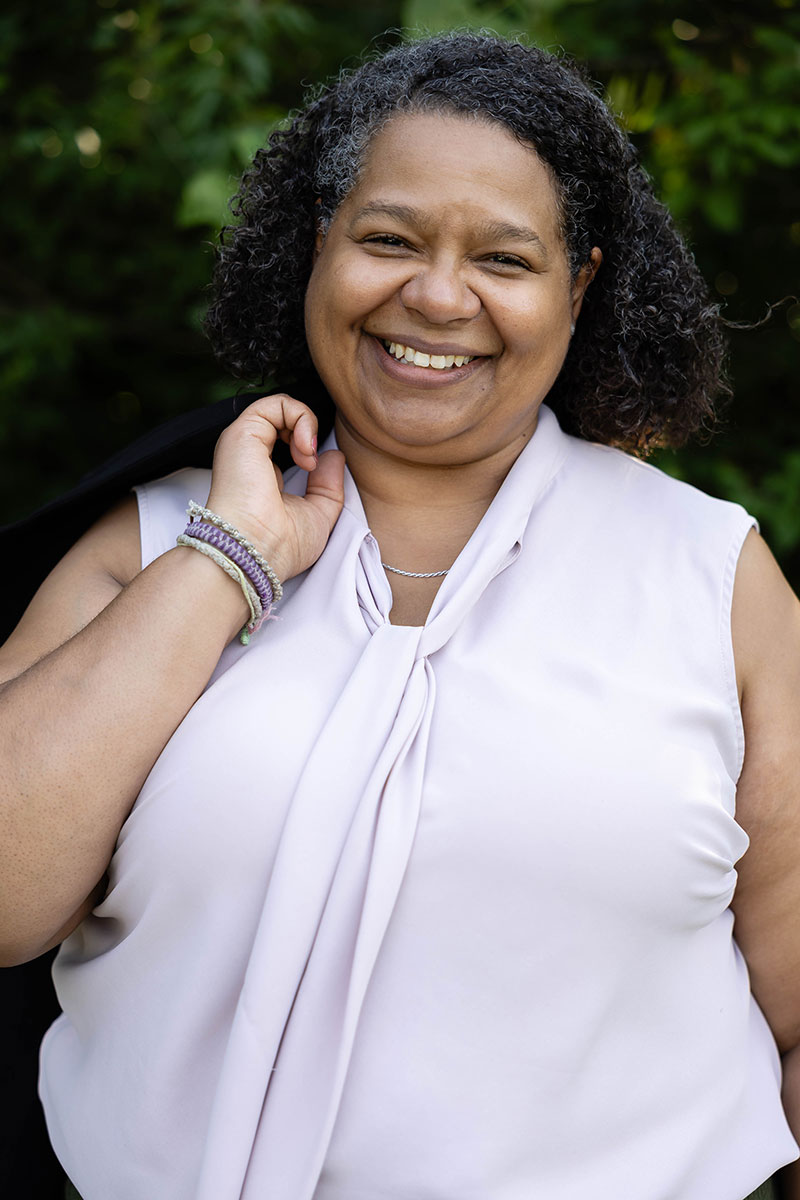
Meet Holly Hagle '06
- Job Title & Employer
- President, Association for Medical Education and Research in Substance Abuse
- Job Title & Employer
- Chief Learning and Research Officer Co-Director, American Academy of Addiction Psychiatry
- Major/Program
- Teaching and Leadership-M.Ed.
- Hometown
- Erie, Pa.
- High School
- Villa Maria Academy
- Now Living In
- Greenwood, Mo.
- Hobbies & Interests
Outside of my professional life, I enjoy spending time on the water, listening to music, being in nature, boating and fishing with my husband and our family dog, Buddy. I am so very proud of our adult children and the impact they are making on the world! Love you, Hannah, Mary, and Julia! I am also an avid fan of reality television and follow several podcasts — I particularly enjoy "Rob Has a Podcast" (Taran Armstrong, content creator and writer) and true crime series.
"I have always appreciated faculty members who did not just teach from a textbook but brought their real-world experiences into the classroom — that mentorship style is something I strive to emulate with my own students in the Ed.D. program today."
Holly Hagle, Ph.D., is both an alumna of and an adjunct in Point Park's School of Education. Her academic journey, which combined psychology and education, as well as her long-term dedication to addiction recovery, prepared her for her latest role — president of the Association for Medical Education and Research in Substance Abuse (AMERS).
Why did you choose Point Park University for your master’s in education?
Growing up in Pennsylvania, I was always aware of Point Park’s reputation for excellence. I chose the program because of its focus on practical, community-centered leadership. At that stage in my career, I wanted to bridge the gap between behavioral health research, educational theory and real-world application. Point Park provided the perfect environment to do just that.
What were your favorite classes or faculty members?
The courses focused on curriculum development and leadership administration were transformative for me. Karen McIntyre, Ph.D., Vincenne Revilla-Beltran, Ph.D., Stanley Denton, Ph.D. and Richard Gutkind, Ph.D., are faculty that inspire me, support me and whom I strive to emulate. I have always appreciated faculty members who did not just teach from a textbook but brought their real-world experiences into the classroom — that mentorship style is something I strive to emulate with my own students in the Ed.D. program today.
What did you do after finishing that degree that led you to your position today?
After my master’s, I pursued a Ph.D. in Leadership Administration and Education, which perfectly tied into my bachelor’s in psychology. My career has been driven by a passion for mental health and addiction education and implementation science research — a journey that included serving as an Associate Research Professor at the University of Missouri, Kansas City (UMKC ) and co-director for the Opioid Response Network (ORN). Those experiences, combined with my personal commitment to the field, led me to my current role as Chief Learning and Research Officer Co-Director (ORN) at the American Academy of Addiction Psychiatry.
Tell us about your recent appointment as president of the Association for Medical Education and Research in Substance Abuse.
Serving as president of AMERSA is a profound honor. The role involves leading a multidisciplinary organization dedicated to improving health and justice for patients and communities through interdisciplinary addiction education and research. Over the next three years, I will be overseeing board governance, strategic planning and advocating for person-centered evidence-based practices in the field.
What does it mean to you to teach at Point Park?
It is incredibly rewarding to give back to the institution that helped shape my own professional path. Teaching at Point Park allows me to mentor the next generation of leaders, sharing the insights I have gained from over 25 years in the field and helping students find their own "why" in their research and practice.
What classes do you teach?
I am primarily involved with the Ed.D. Program in Leadership and Administration, where I teach both research methods courses, quantitative research and qualitative research. I also serve as dissertation chair, advise doctoral candidates and support their research journeys as they work toward their dissertations.
Is there anything else you would like to add?
Beyond my professional titles, I am deeply committed to advocacy for trauma-informed care and addiction education. This work is personal for me; early in my career, I began writing about how substance use and overdose have impacted my own family, which solidified my "why" in this field. I am also very proud of the work we do through the National Institute on Drug Abuse (NIDA) Clinical Trials Network, Northstar Node and our family-run business, Community Education Partners (CEP) Consulting, to ensure that academic research creates a tangible, positive impact on our communities.