
Timothy Roscoe Earns PA Special Education Teaching Certification in Thirteen Months Through ABCTE Program Tuesday, August 11, 2026
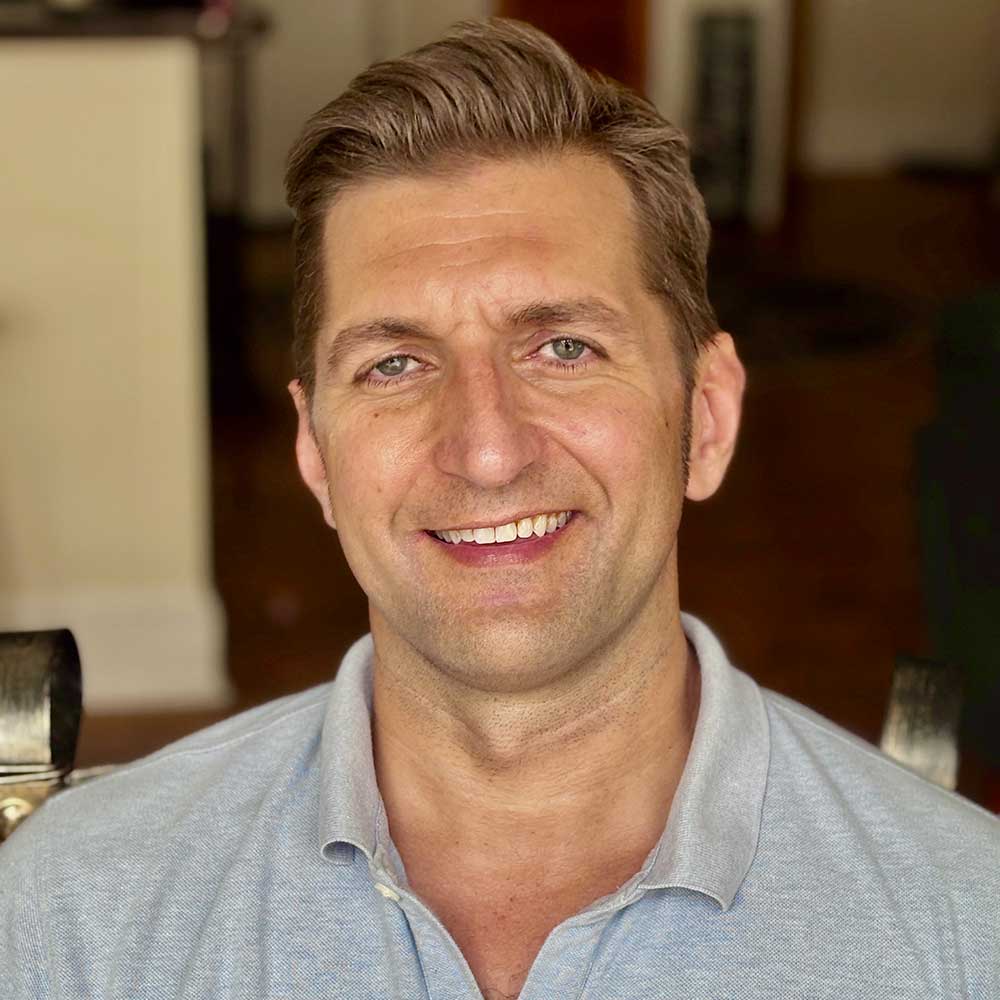
Timothy Roscoe. Submitted photo.
After years of working in fundraising and acting, Timothy Roscoe decided to make the switch to education. The connection between the two fields might not be immediately clear, but for Roscoe, it made sense.
"Right after college, I took a long-term substitute teaching job and loved it, and I think ever since, teaching had remained at the back of my mind," he said. "Then the COVID pandemic gave me time and quiet to step back, and I realized that the thing I'd loved most within both fundraising and acting was always the teaching aspect: presenting a proposal to a prospective donor or working with a school group visiting the theater on a field trip."
Roscoe began a substitute teaching job working with struggling third-grade readers, and during that time, realized that he’d never been so excited to get to work each day. “I haven’t hit my snooze button since,” he said. The decision to make teaching his full-time profession became a “no-brainer."
Since Roscoe already held bachelor's and master's degrees, he enrolled in Point Park University's American Board for the Certification of Teacher Excellence (ABCTE) program, and in just 13 months, earned his Instructional I Certification in K–12 Special Education. The ABCTE program allows students to complete coursework while working full-time, applying their new knowledge to their classroom immediately.
Roscoe's employer, American Paradigm Charter Schools, partnered with Point Park, and his coursework was funded by the Pennsylvania Training and Technical Assistance Network Accelerated Program for PK–12 Special Education Teacher Certification Grant.
In fall 2024, he was hired to teach kindergarten at Lindley Academy Charter School in Philadelphia and was awarded the grant. In fall 2025, he moved into seventh-grade learning support with a provisional certificate. Having completed the ABCTE program, he holds full certification and looks forward to returning to the classroom next year.
Why did you want to be a special education teacher?
I wanted to go into this work with the principle that people with disabilities don't need pity. They have their own potential to excel, and they deserve to be challenged and pushed to realize that excellence. Special education lets you help drive that growth through academics at a pace and intensity that's ambitious yet achievable for each kid, with the luxury of small group and one-on-one work where you can pinpoint a student's specific, evolving needs in the moment.
There's also a strategic dimension to the work that I find exciting. When building and managing a student's IEP, you’re always asking, day to day, "How do we respond to this emerging issue?" "How do we get them to the next skill level?" Every kid deserves the satisfaction of working hard and achieving something real — of surprising themselves — and special education gives you the chance to sort of zoom in close enough to the learning process where you can make sure every kid gets that shot.
What did you gain from your classes and the mentoring you received?
I’ve come to see education, and especially special education, as a fundamentally data-driven enterprise. The coursework introduced me to more and better ways to collect and interpret data, and to use that data both to track students’ progress and build upon that progress through research-based teaching practices.
The mentoring was equally valuable because it helped bridge the gap between theory and the practical exigencies of the classroom. So, these two components of the program gave me a framework for making instructional decisions based on evidence rather than my own instincts.
Which faculty members had an impact on you?
Kristen Misutka, Ph.D., made a significant impact on me, and this is something I think I share with the other members of my cohort. I think it’s easy for someone who has developed real expertise in a field to grow sort of distant from it and look at it strictly from an academic perspective. But Dr. Misutka’s expertise was always matched with a close attention to what was actually happening in classrooms — both in our own classrooms and in classrooms more broadly. Even when discussing theory, she always pushed us to think about how it applied in practice, and the assignments were clearly designed to facilitate that real-world, almost real-time application of what we were learning in class. This made it possible to gauge my own progress as a teacher as we moved through the coursework.
In fact, all of my professors were very eager to facilitate classroom incorporation of the material, and they were always genuinely interested to hear how it went. My mentor, Dr. Flamm, was awesome as well. He put a lot of thought into his feedback, both on observations and the coursework.
How did the program fit into your life and work schedule?
It took a good deal of planning in the beginning, but as the months went on and I got into a routine, it became second nature. We had weekly assignments for each of the classes, plus the three American Board certification exams, so I really had to earmark every bit of free time I could for either coursework or studying. I pretty much knew that if it looked like I’d have some downtime on a night or a weekend, it would need to go toward getting the next thing done.
Halfway through, in fall 2025, I began my first year as a special ed teacher, which in itself has a lot of writing and deadlines built into the job. It was very important to me not to let anything slide either at work or at school — teaching is such a big responsibility, and this program was such a big opportunity, and it was important to me to feel confident that I was doing full justice to both. That made it very easy to make these small sacrifices. I knew it would be well worth it, since I’d already begun doing the job of a special ed teacher: the experience kept confirming it was exactly where I wanted to be.
How will this accomplishment allow you to reach your career goals?
This certification was the goal from the moment I decided to change careers. Although I’d already begun teaching while completing the program, earning my certification means I can now serve as a fully certified special education teacher rather than in a provisional capacity. With that under my belt, I’m just excited to focus on the work itself and on getting really good at it.
Credits from the ABCTE program can be applied to a master's program at Point Park. Are you returning for a master’s?
Yes. I plan to return for the M.A. in Special Education. I originally saw the Point Park coursework mainly as my ticket to certification, but I came away with a real appreciation for the coursework’s practical value. So I’m glad to have the certification, but I realize I have more to learn, and I want more opportunities to strengthen that dialogue between what I’m learning and my own day-to-day teaching practice. The M.A. seems like the next logical step.