Cloe Loosz '25 is Using Her Creative Writing Skills to Promote Events at the Carnegie Museums of Pittsburgh
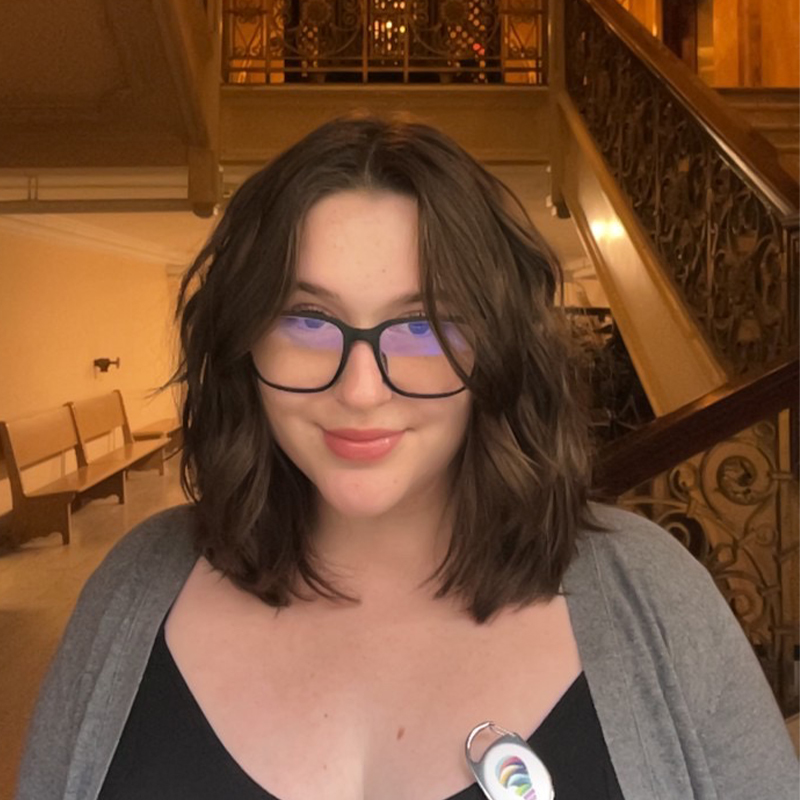
Meet Cloe Loosz
- Job Title & Employer
- Assistant Manager of Engagement, Carnegie Museums of Pittsburgh
- Major/Program
- English/Creative Writing
- Minor
- Graduation
- 2025
- College Activities
- President of the Point Park University Writers Club; Writing Center tutor
- Hometown
- West Mifflin, Pa.
- High School
- West Mifflin Area High School
- Now Living In
- Pittsburgh, Pa.
- Hobbies & Interests
- Creative writing, playing the violin, and engaging with the arts by visiting museums, attending local festivals and attending lectures.
"Being able to write well, communicate clearly, solve problems quickly and stay organized has allowed me to be innovative and self-sustaining very early in my career."
How did Point Park University’s programs help prepare you for your career?
Point Park provided me with the opportunity to explore how my passion for writing could translate into a unique and creatively driven career. My courses ranged from grant writing and public relations writing to fiction and poetry workshops. This range strengthened my ability to communicate with different audiences, think critically, conduct research and approach projects from a consistently creative perspective. Minoring in gender studies and public relations, advertising and social media also helped me understand the relationship between storytelling, understanding demographics and equitable communication.
Outside the classroom, serving as president of the Writers Club and working as a Writing Center tutor helped me develop leadership, project management and transferable marketing skills. Point Park also encouraged me to pursue internships that allowed me to apply what I was learning in real-world settings. These internship experiences in academic research, strategic communication, social media, publishing and journalism ultimately helped me discover my interest in communications, marketing and engagement within established nonprofit, cultural and educational organizations.
Tell us more about your current role and responsibilities. What does a 'day in the job' look like?
As the assistant manager of engagement at Carnegie Museums of Pittsburgh, I help bring the organization's mission to life through event management, audience engagement and strategic communication. Working across Carnegie Museum of Art, Carnegie Museum of Natural History, Carole L. and Daniel G. Kamin Science Center and The Andy Warhol Museum allows me to collaborate with different teams and connect with a wide range of audiences while supporting a shared organizational mission.
My responsibilities span communications and event planning. I help develop promotional emails, monthly external newsletters, internal communications, event invitations and other audience-facing materials. I also support the planning and execution of public and private events, including galas, exhibition openings and donor stewardship events. This involves coordinating with leadership, communicating with vendors, tracking budgets and deliverables and keeping projects moving forward.
No two days look exactly alike. If it’s a Monday or Tuesday, I may begin the day by going through my inboxes and creating my to-do list. I may then spend the morning bouncing between promotional communications and proofreading materials. Then I’ll finish the day by preparing meeting documents for the week, organizing an events spreadsheet and filling out related forms. The role requires strong organizational skills, adaptability and the ability to balance both the big picture and the small details that make an event or campaign initiative successful.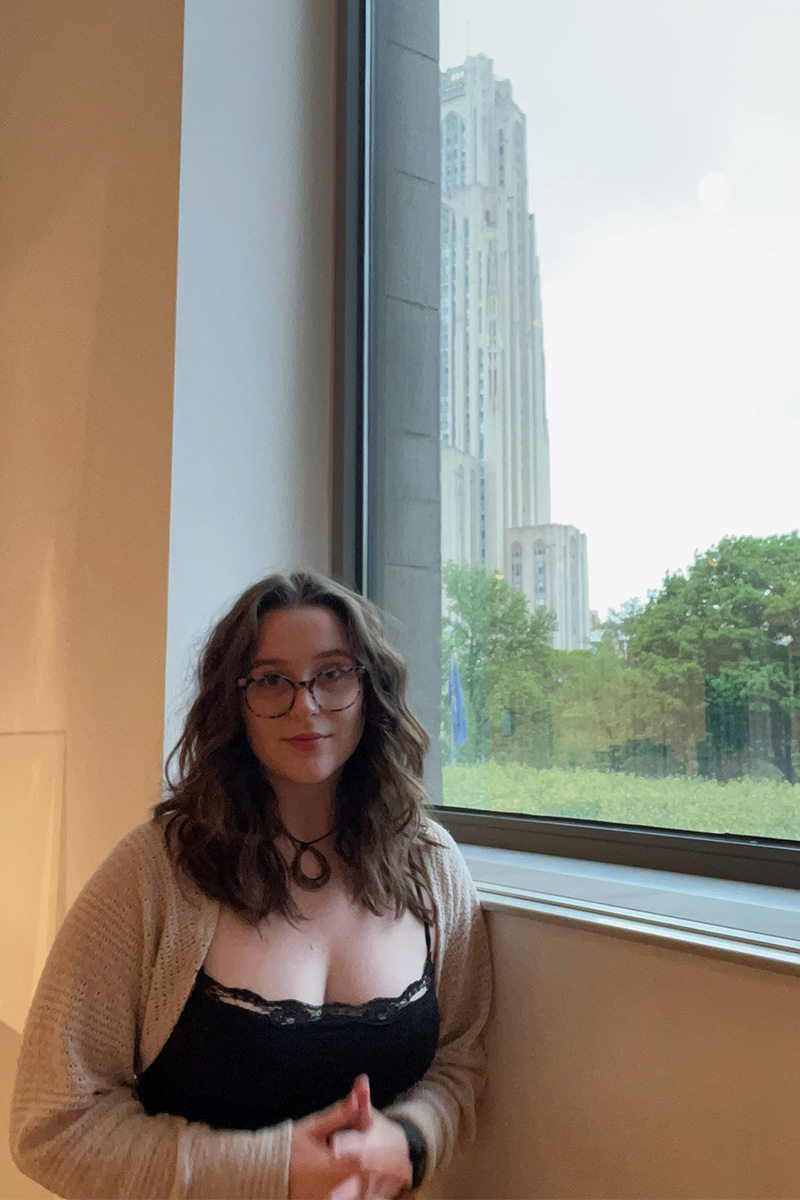
As the assistant manager of engagement, how do you use the creative writing skills you learned at Point Park?
I use my creative writing background every day. Whether I’m drafting an event invitation, developing promotional messaging, writing a newsletter or communicating the impact of a museum initiative to a donor at an event, I’m always thinking about storytelling and the audience on the other side of my message.
Creative writing taught me to be intentional with language, consider different perspectives and communicate ideas in ways that resonate with readers. These skills are especially important in a nonprofit environment, where we connect people with art and culture. I’d like to think my liberal arts major gave me an incredible creative edge and built on my natural love for the missions of most cultural nonprofits.
I have also learned that effective communication is about much more than writing well. It means understanding an organization's voice, anticipating an audience's ever-changing needs and making sure the right information reaches the right people at the right time. My creative writing education gave me a strong foundation for this entire skill set.
You also worked several internships throughout college. How has this diverse set of roles helped your journey?
My internships helped me discover my niche career path in cultural, educational and academic nonprofit communications. I gained experience in journalism with the Mon Valley Independent and Trill Mag; social media marketing management and book editing with Pie Press Publishing; and marketing and public relations through WBAI Radio and Regen Network.
Each role strengthened a different skill set. Journalism strengthened my research, interviewing and storytelling skills. Working in publishing and marketing showed me how to shape messages for specific audiences and organizational goals.
These experiences allowed me to enter the workforce with a strong, applicable skill set and a clearer understanding of how I wanted my career to take shape. Rather than feeling limited to one career path, I learned that a creative writing degree could open doors across communications, marketing, publishing, journalism and various forms of nonprofit work.
What is the experience like moving from the classroom to a career?
Moving from the classroom into a career has been an exciting learning experience. Thankfully, I was always balancing various projects, internships and club activities in college. This eased my transition into the professional world, where I constantly balance competing priorities, collaborate with different personalities and adapt when plans change. I have also found that the writing, research, marketing and critical-thinking skills I developed at Point Park are incredibly valuable, as are the organizational and interpersonal skills you build through work experience outside the classroom.
What advice would you give to current students following your path?
My biggest piece of advice is to take advantage of opportunities that might not seem directly related to your major at first. Pursue internships, join student organizations and build strong relationships with professors and professionals in fields that interest you. I still come back to Point Park to chat with my former professors, who are now mentors, about my career goals. And remember, you do not need to have your entire career mapped out before graduation.
I would also encourage students to recognize the value of the skills they are developing, even if they do not yet know exactly how they will use them. Being able to write well, communicate clearly, solve problems quickly and stay organized has allowed me to be innovative and self-sustaining very early in my career. Give yourself permission to explore, and do not underestimate the opportunities that can come from combining your interests.
Why should students be interested in pursuing a degree in creative writing?
Creative writing is about much more than writing stories or pursuing a career as an author. These paths are important, but it also teaches you how to communicate, think critically, understand people and approach problems creatively. These are skills that translate into a wide range of careers, including journalism, publishing, education, nonprofit communications and many others.
For me, my degree provided a foundation that I have been able to build upon in several professional settings. My ability to write thoughtfully and adapt my communication style has become an important part of my work in engagement and communications.
I also think there is tremendous value in studying creative writing simply because it encourages you to think creatively and ahead. I have been complimented many times at work on my ability to think quickly on my feet, propose innovative solutions and think ahead by refining and implementing new processes. Students should not feel that choosing creative writing means limiting their future. Personally, I believe it gave me an incredible leg up!
Is there anything else you would like to add?
I am incredibly grateful for the experiences I had at Point Park and for the opportunities I have had to turn my interests in writing, communication and the arts into a career. Working at Carnegie Museums has allowed me to combine these interests while contributing to an organization that connects people with art, science, history and culture.
I hope current students feel encouraged to explore different opportunities, trust the skills they are developing and remain open to where their education can take them. Your first job or internship does not have to define your entire career, and sometimes the most valuable experiences are the ones that help you discover a direction you had not initially considered. Most importantly, you do not have to know exactly what you want to do after graduation. Gather experience, find a field that interests you and be confident in your ongoing ability to learn and grow!